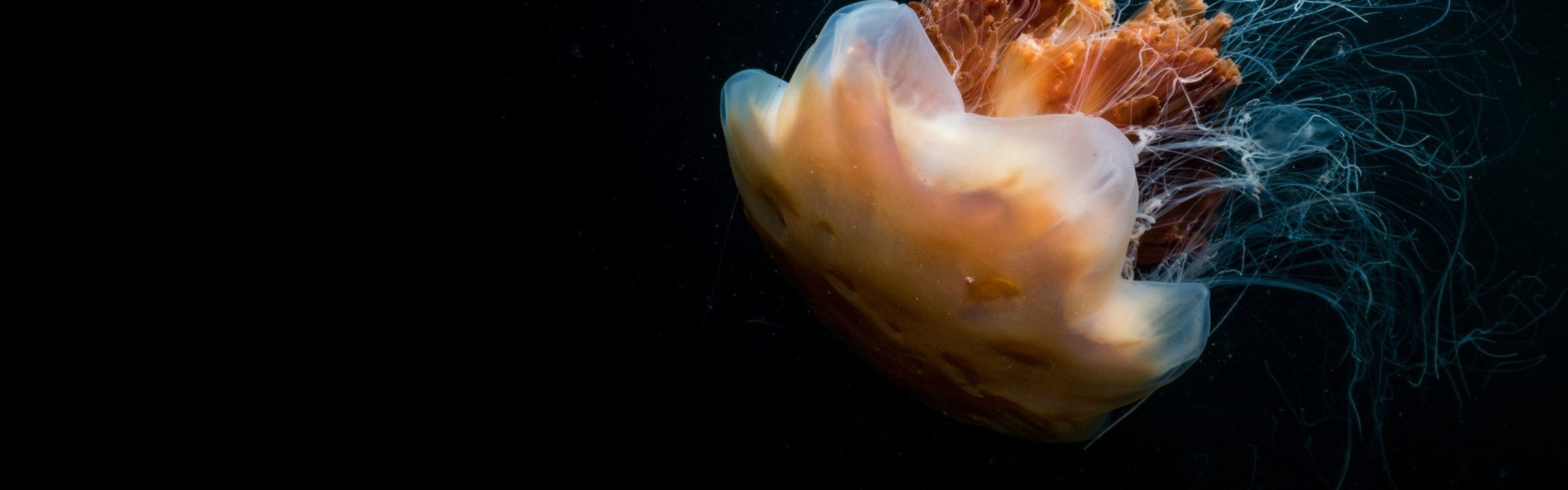
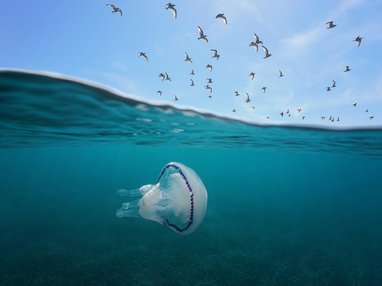
An orange jellyfish srrounded by darkness

Amazing ocean (7-11)
With these resources your students will explore incredible underwater landscapes and the many creatures that live above and below the water's surface.

    1. Introducing the ocean

    Our corner of the ocean, the North East Atlantic, is home to incredibly diverse habitats and species. Discover the wonders of our ocean and why a healthy ocean is important not just to marine life, but all life on Earth.

    Explore how your school is connected to the ocean, and describe the five parts of the ocean.

    Students will also learn why the ocean is salty and what causes the tides.

    1. Introducing the ocean (ages 7-11) Lesson plan

    A Barrel jellyfish  |  Image credit: Damsea via Shutterstock
    2. Create a food web

    In this session students will learn to identify marine animals and build a food web.

    They'll be able to define the terms predators, prey, producers, consumer, herbivore, carnivore, omnivore, habitat and diversity.

    Students will also look at how external factors and threats affect a food web.

    2. Create a food web (ages 7-11) Lesson plan
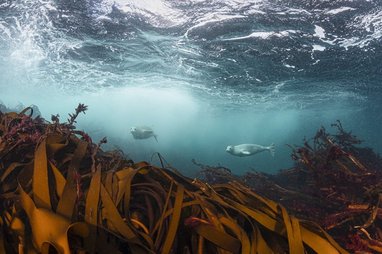
    This image captures grey seals swimming through a kelp forest in the UK, specifically off the coast of Scotland.

    Grey seals swimming through a kelp forest in the UK  |  Image credit: Kirsty Andrews
    3. How do creatures adapt?

    Through studying UK marine habitats, students will learn to identify a variety of creatures, as well as how and why they have adapted to their environments.

    Working in small groups on a play about life in a habitat will help cement learning and allow creativity to develop.

    3. How do creatures adapt? (ages 7-11) Lesson plan
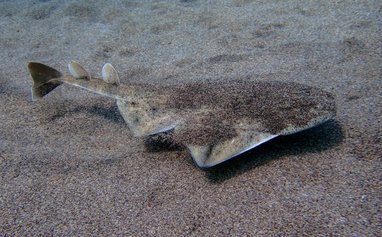
    The image displays an angel shark (genus Squatina), specifically noted for its flat, ray-like body used for camouflaging on sandy seabeds.

    An angel shark (genus Squatina)  |  Image credit: Luis Miguel Estevez via Shutterstock
    4. Life in the deep

    In this activity-led session students will discover how animals in the deep have adapted to the harsh conditions.

    Activities include paired work, class scientific observation, group measuring exercises and analysing images.

    At the end of the lesson, students can design their own deep sea creature to include the adaptation features covered.

    4. Life in the deep (ages 7-11) Lesson plan
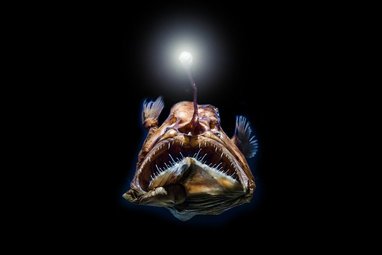
    A deep sea anglerfish, known for its fascinating adaptations to the extreme darkness of the deep ocean.

    Deep Sea Anglerfish  |  Image credit: Superjoseph via Shutterstock
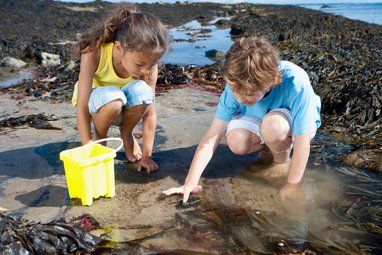
    5. Rockpool explorer (outside)

    Rockpools are fascinating environments to explore; this lesson involves taking your class on a trip to local rockpools. Students will focus on habitat conditions, adaptations and grouping animals.

    This lesson provides pre- and post-activities to increase learning opportunities.

    5. Rockpool explorer - outside (ages 7-11) Lesson plan
    2 children engaging in an educational coastal activity known as rock pooling. The gil has a yellow bucket next to her.

    Children rock pooling  |  Image credit: Air Images
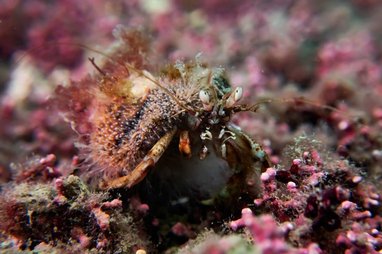
    6. Rockpool explorer (inside)

    Bring the seaside to the classroom through a virtual rockpool exploration.

    Students will study these fascinating habitats, exploring the conditions and adaptation features and begin to group animals.

    6. Rockpool explorer - inside (ages 7-11) Lesson plan
    A close-up of a hermit crab. It has a hairy, speckled appearance and prominent eyes on stalks. Its large right claw is visible at the front. The background consists of pink, red, and brown maerl coral agae.

    Hermit crab on maerl  |  Image credit: Georgie Bull
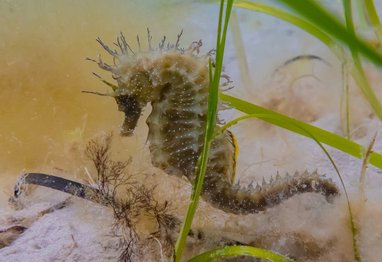
    7. Grouping animals

    Working in small groups, students will sort animals by their features and characteristics.

    By the end of the activity, students will be able to define invertebrates and vertebrates, and name and describe characteristics of marine mammals, reptiles, birds and fish.

    7. Grouping animals (ages 7-11) Lesson plan
    The image features a Long-snouted seahorse (Hippocampus guttulatus), also known as a spiny seahorse, which is a protected marine species native to UK coastal waters.

    A Long-snouted seahorse  |  Image credit: Georgie Bull
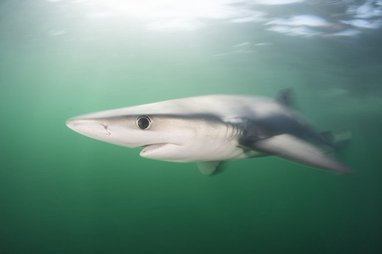
    8. Sharks aren't scary

    Sharks are fascinating creatures and we are lucky to have 21 resident species in UK seas.

    This lesson explores the biology of sharks, including studying their anatomy, life cycle, and feeding adaptations. The lesson also touches on why these incredible creatures are threatened.

    8. Sharks aren't scary (ages 7-11) Lesson plan
    Blue Shark (Prionace glauca) swimming underwater.

    Blue Shark  |  Image credit: Kirsty Andrews
    9. Tremendous turtles

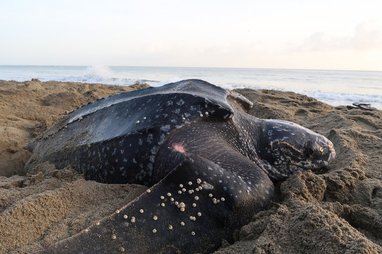
    In this lesson, students will learn about biology, migration patterns and conservation of sea turtles. They will manipulate and present scientific data, increase their map skills, and develop their reading and writing skills.

    9. Tremendous turtles (ages 7-11) Lesson plan
    This is a Leatherback sea turtle (Dermochelys coriacea), the largest turtle species in the world.

    A Leatherback sea turtle  |  Image credit: William Farah via Shutterstock
    Check out the wildlife A-Z

    Learn about our amazing local species

    Check out other ocean topics for 7-11 year olds