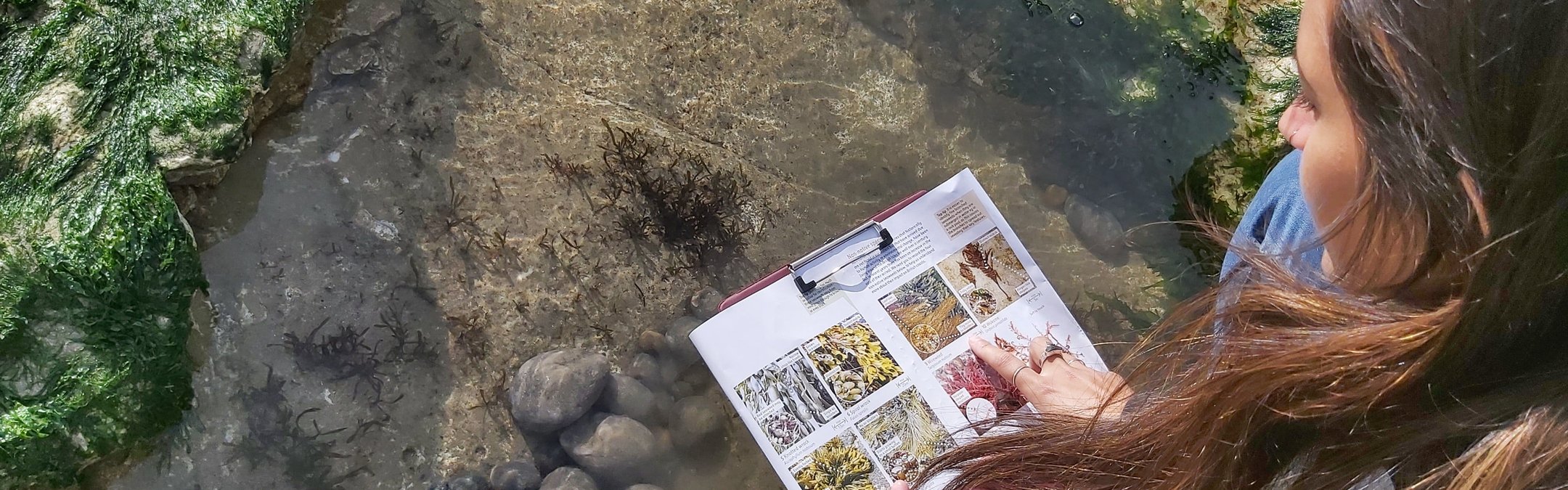
A person with long brown hair, wearing a black jacket and blue jeans, is kneeling by a rocky shore and looking at a guide book for identifying seaweed

Search for seaweed

Contribute to our database and help us monitor environmental changes and manage these vital resources.

DofE Seaweed Search 3-month plan
Seaweed search for DofE

We need people to record the seaweeds found on our coastline to help us research rising sea temperatures and the impact of the sea becoming more acidic as a result of absorbing carbon dioxide from the air.

You can do this activity on any seashore in the British Isles. All shores are important for the research, but you will find more seaweeds on shores with hard structures like rocks, sea walls and piers.

Your findings will contribute to a real MCS and Natural History Museum scientific research project.

DofE Assessors: Unfortunately we cannot act as Assessors for your award. Please see the advice on choosing an Assessor on the DofE website.

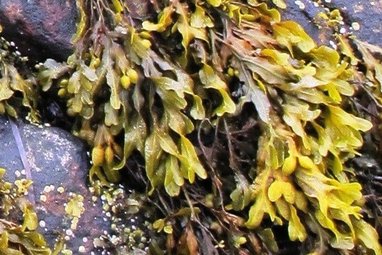
Spiral Wrack, a type of brown seaweed commonly found on rocky shores in the UK  |  Image credit: Juliet Brodie
Step-by-step plans

Our step-by-step plans show you how to get involved and contribute to this globally-important dataset:

DofE Seaweed Search 3-month plan

DofE Seaweed Search 6-month plan 

DofE Seaweed Search 12-month plan 

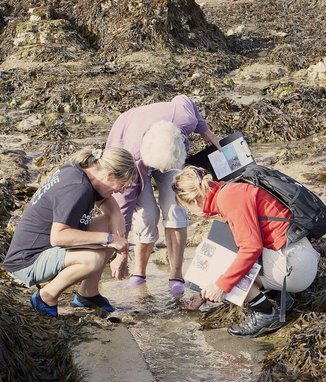
3 people huddled around a stream of water on a beach looking in depth at some live seaweed. They are surrounded by seaweed. All three are holding clipboards.

Volunteers participating in a big seaweed search survey  |  Image credit: Billy Barraclough
Big Seaweed Search

We started working with the Natural History Museum on the Big Seaweed Search in 2007. Since then, hundreds of people have taken part.

The data collected provides vital information about environmental changes affecting seaweeds. As a result, we can better understand and protect this vitally-important habitat.

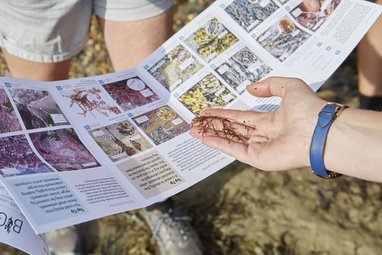
A close-up of a person's hand holding a small, reddish-brown piece of seaweed over an open, illustrated seaweed field guide on a beach. The guide contains images and text about non-native species and ocean acidification.

Volunteers checking a piece of seaweed against a seaweed identification guide  |  Image credit: Natural History Museum London
This project is funded by the Government's Green Recovery Challenge Fund. The fund was developed by Defra and its Arm's-Length Bodies. It is being delivered by The National Lottery Heritage Fund in partnership with Natural England, the Environment Agency and Forestry Commission.

Green Recovery Challenge Fund

Green Recovery Challenge Fund

Co-funded by the European Union

Other ways to volunteer for your Duke of Edinburgh Award