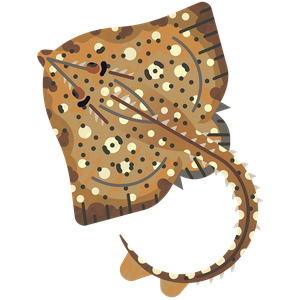
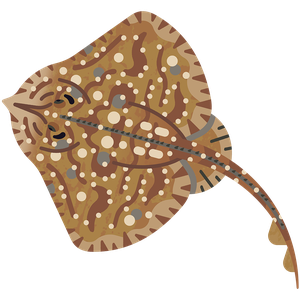
Brill
What to check for
North Sea, Skagerrak and Kattegat, English Channel: All areas
Net (gill or fixed)
Rating summary
Brill in this area is not in an overfished state and not subject to overfishing. Management of turbot and brill is under a combined species Total Allowable Catch (TAC) which prevents effective control of the single-species exploitation rates. Despite this, catches of brill in recent years have been below the recommended level. Whilst gill net fisheries can be very selective with regards to targeted fish species, they can encounter bycatch of vulnerable species including porpoise, sharks and seabirds. Bycatch of harbour porpoise in the North Sea is not considered to be a threat to the population, but localised depletion may be an issue in some areas.
Rating last updated July 2023.
How we worked out this Rating
References
ASCOBANS, 2009. Conservation Plan for Harbour Porpoises in the North Sea as adopted at the 6th Meeting of the Parties to ASCOBANS, Bonn, Germany. 16 - 18 September 2009. Available at https://www.ascobans.org/sites/default/files/document/ASCOBANS_NorthSeaPlan_MOP6.pdf [Accessed on 06.07.2023].
Calderan, S. and Leaper, R., 2019. Review of harbour porpoise bycatch in UK waters and recommendations for management. January 2019, WWF. Available at https://www.wwf.org.uk/sites/default/files/2019-04/Review_of_harbour_porpoise_in_UK_waters_2019.pdf [Accessed on 06.07.2023].
Carlén, I., Nunny, L. and Simmonds, M. P. 2021. Out of Sight, Out of Mind: How Conservation Is Failing European Porpoises. Frontiers in Marine Science. Available at https://www.frontiersin.org/articles/10.3389/fmars.2021.617478/full [Accessed on 06.07.2023].
Chadwick, H., Clear, N., Crosby, A., Hawtrey-Collier, A. and Williams, R. 2019 Annual Report. Marine Strandings in Cornwall and the Isles of Scilly. Available at https://www.cornwallwildlifetrust.org.uk/sites/default/files/2020-12/2019%20Summary%20Report%20-%20Marine%20Strandings%20in%20Cornwall%20and%20the%20Isles%20of%20Scilly.pdf [Accessed on 06.07.2023].
Clean Catch UK. Joint Action To Reduce Wildlife Bycatch. Available at https://www.cleancatchuk.com/ [Accessed on 06.07.2023].
Froese R. and Pauly D. (Editors), 2019. Scopthalmus rhombus, Brill. Available at: https://www.fishbase.de/Summary/SpeciesSummary.php?ID=529&AT=brill [Accessed on 06.07.2023].
ICES, 2018. ICES Advice: Bycatch of small cetaceans and other marine animals - review of national reports under Council Regulation (EC) No. 812/2004 and other information. Published 11 September 2018. Available at https://www.ices.dk/sites/pub/Publication%20Reports/Advice/2018/2018/byc.eu.pdf [Accessed on 06.07.2023].
ICES. 2021. Greater North Sea Sea Ecoregion – Ecosystem overview. In Report of the ICES Advisory Committee, 2021. ICES Advice 2021, Section 9.1, https://doi.org/10.17895/ices.advice.9434 [Accessed on 19.07.2022].
ICES. 2022. EU/UK request to ICES on lemon sole, witch, turbot, and brill: Review of ICES advice provided in 2018 on the contribution of TACs to fisheries management and stock conservation. In Report of the ICES Advisory Committee, 2022. ICES Advice 2022, sr.2022.19. Available at https://doi.org/10.17895/ices.advice.21739322 [Accessed on 06.07.2023].
ICES. 2023. Brill (Scophthalmus rhombus) in Subarea 4 and divisions 3.a and 7.d–e (North Sea, Skagerrak and Kattegat, English Channel). In Report of the ICES Advisory Committee, 2023. ICES Advice 2023, bll.27.3a47de. Available at https://doi.org/10.17895/ices.advice.21840735 [Accessed on 06.07.2023].
Leeney, R. H., Amies, R., Broderick, A.C., Witt, M. J., Loveridge, J., Doyle, J. and Godley, B. J. 2008. Spatio-temporal analysis of cetacean strandings and bycatch in a UK fisheries hotspot. Biodiversity and Conservation. 17, 2323. Available at https://link.springer.com/article/10.1007/s10531-008-9377-5#citeas [Accessed on 06.07.2023].
Leeney, R. H., Witt, M. J., Broderick, A. C., Buchanan, J., Jarvis, D. S., Richardson, P. B. and Godley, B. J. 2011. Marine megavertebrates of Cornwall and the Isles of Scilly: relative abundance and distribution. Journal of the Marine Biological Association of the United Kingdom, 92(8), 1823-1833. Available at https://www.cambridge.org/core/journals/journal-of-the-marine-biological-association-of-the-united-kingdom/article/marine-megavertebrates-of-cornwall-and-the-isles-of-scilly-relative-abundance-and-distribution/7981AA197C2320B6A9E2C01BD7A1F7B7 [Accessed on 06.07.2023].
Moan, A., Skern-Mauritzen, M., Vølstad, J. H., Bjørge, A. 2020. Assessing the impact of fisheries-related mortality of harbour porpoise (Phocoena phocoena) caused by incidental bycatch in the dynamic Norwegian gillnet fisheries, ICES Journal of Marine Science, Volume 77, Issue 7-8, Pages 3039–3049. Available at https://doi.org/10.1093/icesjms/fsaa186 [Accessed on 06.07.2023].
North Atlantic Marine Mammal Commission and the Norwegian Institute of Marine Research. 2019. Report of Joint IMR/NAMMCO International Workshop on the Status of Harbour Porpoises in the North Atlantic. Tromsø, Norway. Available at https://www.ascobans.org/sites/default/files/document/ascobans_ac25_inf.4.3a_joint-imr-nammco-ws-harbour-porpoise.pdf [Accessed on 06.07.2023].
Omeyer, L. C. M., Doherty, P. D., Dolman, S., Enever, R., Reese, A., Tregenza, N., Williams, R. and Godley, B. J. 2020. Assessing the Effects of Banana Pingers as a Bycatch Mitigation Device for Harbour Porpoises (Phocoena phocoena). Frontiers in Marine Science. Available at https://www.frontiersin.org/articles/10.3389/fmars.2020.00285/full [Accessed on 06.07.2023].
OSPAR, 2017. Intermediate Assessment 2017: Harbour Porpoise Bycatch. Available at https://oap.ospar.org/en/ospar-assessments/intermediate-assessment-2017/biodiversity-status/marine-mammals/harbour-porpoise-bycatch/ [Accessed on 06.07.2023].