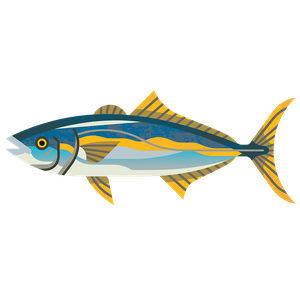
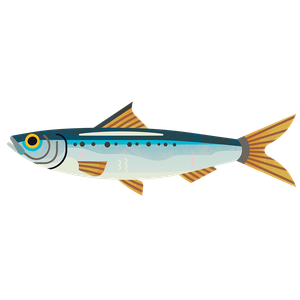
Yellowfin tuna
Thunnus albacares
What to check for
Location
Indian Ocean: FIP participants only
Technical location
57 - Indian Ocean, Eastern, 51 - Indian Ocean, Western, All areas, All areas
Caught by
Hook & line (longline)
Certification
Fishery Improvement Project (FIP)
Rating summary
The yellowfin tuna stock in the Indian Ocean is not overfished or subject to overfishing. Few appropriate management measures are in place for Indian Ocean yellowfin tuna. Catches in previous years have been too high, and monitoring and enforcement needs to be improved. Some yellowfin catches from the Indian Ocean are by longline. While longlining is unlikely to have habitat impacts, it can have a bycatch of highly vulnerable species such as sharks, turtles, and seabirds.There are numerous Fishery Improvement Projects in the Indian Ocean, aimed at improving the sustainability of yellowfin tuna fisheries.Rating last updated January 2026.
How we worked out this Rating
Stock status
The size and health of a fish population, or 'stock', that is being targeted by fishermen is a crucial indicator of whether a fishery is sustainable. If the stock is too small to withstand fishing, it is at risk of crashing. We look at how big the stock is, and how much pressure there is from fishing, to assess this. The target level that many fisheries aim for is 'Maximum Sustainable Yield' - the most fish that can be caught year after year whilst keeping the population at a healthy size.
The yellowfin tuna stock in the Indian Ocean is currently no overfished or subject to overfishing.This stock is managed and assessed by the Indian Ocean Tuna Commission (IOTC). Indian Ocean yellowfin has been caught since the 1950s. Catches peaked at around 540,000 tonnes in 2004, dropped to around 270,000 t in 2009 and in recent years have stabilised at around 425,000 t. A new stock assessment was carried out in 2024, using data up to 2023. The next stock assessment is expected after 2027.The 2024 stock assessment was carried out using an updated model that included a series of revisions compared to the model used in the 2021 assessment.Spawning biomass (SSB) has been declining since the 1980s. It is estimated that the stock in 2023 was 44% of unfished levels and 32% above target levels (Maximum Sustainable Yield, SBMSY). Therefore, it is in an overfished state, but above the lower limit (Blim) of 40% of MSY. This is an improvement from the previous assessment in 2021, when the stock was estimated to be 87% of SBMSY. Therefore, the stock is not subject to overfishing.Fishing mortality (F) in 2023 was 75% of target levels (FMSY). This is an decrease from the previous assessment, when F was 132% of FMSY. Therefore, F is no longer approaching, the upper limit of 140% of MSY and there is no concern for fishing pressure.Projections indicate that if catches are maintained around MSY levels, 421,000 tonnes (range 416,000–430,000 tonnes), there is a greater than 50% probability that the stock will remain above SBMSY in 2033. The five‑year average catch for 2019-2023 (423,143t) falls within this range, while the 2023 catch (401,400 tonnes) falls below it, these are in line with projections. Additionally, under recent catch levels, the probability of breaching either Blim or Flim by 2033 is projected to be 0%.
Management
Good management is vital to be sure that fishing doesn't cause fish populations to decline. We look at whether regulations follow the best available scientific advice, how well compliance is monitored and enforced, and whether this is effective in maintaining healthy fish stocks.
Few appropriate management measures are in place for Indian Ocean yellowfin tuna. Stock rebuilding plans have been in place since 2016, but have been ineffective. Catches are too high, and monitoring and enforcement needs to be improved. This rating covers Fishery Improvement Projects in the Indian Ocean, which have failed to address these issues.The two main Fishery Improvement Projects (FIPs) in this area aimed to improve the sustainability of yellowfin tuna fisheries by 2028. They have not been successful: as of 2024 management measures continue to be inadequate. Consequently, it is not possible for the FIPs to address these challenges within the stated timescales, so they do not meet the definition of 'credible' according to the Good Fish Guide. Therefore, these FIPs are no longer given an Improver rating, and instead have the same rating as the wider yellowfin fishery. Based on the recent history of this fishery, and the considerable challenges facing stock and management, we suggest that it is not realistic for Indian Ocean yellowfin tuna to be included in any FIP aiming for MSC certification at this time.Further details on management and FIPs are below:Tuna, marlin, and swordfish are highly migratory species, found on the high seas and in numerous countries' waters. This makes harmonised and effective management challenging. Regional Fisheries Management Organisations (RFMOs) are responsible for monitoring and managing these stocks on behalf of the countries that access them. However, the degree to which management is implemented, monitored and enforced by each country varies significantly.Indian Ocean yellowfin tuna is managed and assessed by the Indian Ocean Tuna Commission (IOTC). The stock in 2023 is considered to be underfished and not subject to overfishing. Although interim rebuilding plans have been in place since 2016 to recover the stock to target levels. The Yellowfin Management Strategy Evaluation has been inactive for several years, pending a stock assessment revision.The rebuilding plans for 2016-2021 aimed to reduce catches by 20% from 2014 levels (405,000 tonnes), with variations by gear type. However, even with full compliance, the measures were estimated to deliver only a 10% reduction. Some countries, particularly those operating longline fleets, achieved the required reductions during this period and again in 2023. The Maldives decommissioned its longline yellowfin fleet in 2019, removing catches of around 3,000 tonnes per year to support stock recovery. These efforts were offset by increased catches elsewhere, especially by gillnet fleets, indicating that the plans were inadequately enforced and overall management remained insufficient to protect the stock.Total catches declined in 2023 to 401,400 tonnes, below the five‑year average of 423,143 tonnes (2019-2023). Projections indicate that maintaining catches within the recent 20‑year maximum sustainable yield range (416,000-430,000 tonnes) gives a greater than 50% probability that the stock will remain above the biomass target level (SBMSY) in 2033. However, Higher catch levels are predicted to lead to stock decline over the long term. Due to uncertainty in the recent assessment, it has been recommended that an initial one‑year total allowable catch (TAC) in 2026, not exceeding 421,000 tonnes.Several concerns have been raised about the 2016-2021 rebuilding plans. Catch reductions only applied to countries reporting catches above 5,000 tonnes in 2014, creating incentives for under‑reporting. Countries were also free to choose how they achieved reductions, leading to inconsistent and often ineffective approaches. In practice, fishing pressure was displaced towards purse seine fisheries using fish aggregating devices (FADs), increasing catches of skipjack tuna and juvenile yellowfin and bigeye tuna.The interim rebuilding plan introduced in 2022 included further catch reductions and catch freezes based on historical catch periods. If fully implemented, it is projected to reduce catches to around 401,000 tonnes, though it is too early to assess its effectiveness. Several high‑catch countries objected to the measure and are therefore exempt. While overall catch reductions remain essential, targeted action is needed to reduce catches of juvenile yellowfin. There are currently no minimum size limits, and some gears, particularly gillnets, FAD‑associated purse seines, and pole‑and‑line fisheries, take high proportions of juveniles and may require further restrictions. Improved monitoring and compliance are critical, as rebuilding plans are unlikely to succeed without effective enforcement.In addition to catch limits, measures are in place to constrain fishing capacity, particularly for the purse seine fleet, which accounts for around 30% of total catches. This includes limits on the number of supply vessels and progressive restrictions on FAD use, which declined from 550 FADs per vessel in 2015 to 300 from 2019 onwards. Countries using FADs must report their use and submit FAD management plans describing how they will minimise impacts on juvenile tuna and vulnerable non‑target species such as sharks, turtles and rays. Only purse seine vessels and their associated supply vessels may deploy drifting FADs (DFADs), and these must be fitted with activated, registered instrumented buoys. From 1 January 2026, vessels may follow no more than 250 instrumented buoys at any one time and may acquire a maximum of 400 per year, with further reductions from 2028. A DFAD Register applies from 1 January 2026 to all purse seine vessels fishing on DFADs.A general freeze on fleet capacity at 2003 levels is also in place to prevent further expansion. However, this measure is broad, applies across all fleets, and has reportedly been poorly enforced. More targeted approaches, such as spatial and temporal closures and quota allocation, may be more effective.Monitoring and compliance in the IOTC region remain weak. Some countries repeatedly fail to submit catch data. In 2018, the IOTC introduced measures to improve reporting, including prohibitions on retaining species when catch data are not reported, yet data gaps persist. Mandatory observer coverage remains at just 5% for vessels operating outside their Exclusive Economic Zones, well below the 20% coverage generally recommended by scientists. Proposals to increase coverage have so far failed to achieve consensus.Some catches may be misreported due to uncertainty over the boundary between Atlantic and Indian Ocean stocks. Genetic evidence suggests that much of South Africa’s reported Atlantic catch may in fact originate from the Indian Ocean stock.Other IOTC conservation and management measures of note include:Discarding bigeye, yellowfin, skipjack tunas, and non-target species at sea is banned.To help address Illegal, Unregulated, and Unreported fishing (IUU), the IOTC maintains an active vessel register and an IUU Vessel List. In 2021, all transhipments at sea were banned, except for large scale tuna longliners, which must be pre-approved, monitored by an observer and the vessel uses a Vessel Monitoring System (VMS).In 2012 IOTC banned the use of driftnets on the high seas. In 2022 this was extended to the entire IOTC area (i.e. including countries' EEZs).Using aircraft and unmanned aerial vehicles as fishing aids, which significantly contribute to fishing effort by helping to detect fish, is banned.Using artificial lights to attract tuna and tuna-like species beyond territorial waters is banned.Of the Fishery Improvement Projects covering yellowfin tuna in the Indian Ocean, two of note include SIOTI Purse Seine and Sri Lanka Longline.The largest of these is the Sustainable Indian Ocean Tuna Initiative (SIOTI), which covers yellowfin, bigeye and skipjack. It is responsible for 20% of the total catch of these species in the Indian Ocean. The relevant fleets and waters are the EU (France, Spain, Italy), Western Indian Ocean coastal states, Seychelles, and Mauritius. It runs from 2017-2028, and is at the point of making improvements in fishing practices or fishery management. Most improvements relate to reducing bycatch and improving observer coverage. The fleet follows a Code of Good Practice to reduce bycatch, and observer coverage is above 75%, but there remain concerns about data quality and the impacts of FADs. SIOTI has supported research into improved yellowfin stock assessments and harvest strategies, and has helped countries to bring IOTC regulations into domestic legislation and improve compliance. However, SIOTI fleets have not adopted fishery management plans or harvest strategies to help tackle overfishing of yellowfin.The Sri Lanka longline FIP runs from 2018-2028. It is responsible for around 7,400t of yellowfin catches. Improvements in fishing practices or fishery management have been made, primarily focussing on reducing bycatch. It has also improved data collection on catch and bycatch, although further improvements are needed. Sri Lanka is currently failing to meet the IOTC's observer coverage requirement of 5%, so the FIP is implementing a local observer programme with a small number of vessels (21 out of 1,350). The FIP has conducted its own yellowfin stock assessment and submitted this to the IOTC with management recommendations. However, Sri Lanka failed to comply with catch reductions for 2017-2019, and so is not tackling the key issue of overfishing. Development of a Harvest Strategy was originally included on the FIP workplan, but this appears to have been dropped, reducing its ability to address all key issues.
Capture method
Environmental impacts of fishing vary hugely, depending on the method used and where it's happening. We look at whether the fishing gear being used could have an effect on seabed habitats, and if so, how severe might this be. We also review whether it catches any other species by accident (bycatch), and what effect this might have on those species - especially if they're Endangered, Threatened, or Protected.
Some yellowfin catches from the Indian Ocean are by longline. While longlining is unlikely to have habitat impacts, it can have a bycatch of highly vulnerable species such as sharks, turtles, and seabirds.Around 40% of the yellowfin catch in the Indian Ocean is taken in pelagic and coastal longline fisheries, this is followed by purse seine (33%). Additionally, gillnet takes around 15% and receives a default red from the Good Fish Guide owing to the very high levels of cetacean and turtle bycatch. The remaining 12% of catch is from various other gears such as pole and line, troll, and handlining.There are numerous Fishery Improvement Projects in the Indian Ocean, aimed at improving the sustainability of yellowfin tuna fisheries. Work by FIPs in this area includes investigating ways to reduce the environmental impacts of longline fishing.A number of Endangered and Critically Endangered species are caught as bycatch in Indian Ocean longline fisheries, but scientifically recommended gear modifications to reduce impacts have not been implemented. Several countries have failed to implement national plans of action (NPOAs) for sharks, seabirds and turtles as required. Monitoring and reporting of bycatch in fisheries managed by IOTC is poor. Most data come from scientific observers on vessels. Scientific recommendations are that 20% of a fishery should be observed for accurate data. IOTC only requires coverage of 5%. Many fleets are not reaching this level. This makes it difficult to assess the impact of these fisheries on vulnerable species.The IOTC reports that flatback, green, hawksbill, leatherback, loggerhead and olive ridley turtles are caught in its fisheries. Of these, hawksbills, southwest Indian Ocean leatherbacks, and northwest Indian Ocean loggerheads are critically endangered. Data on interactions is not regularly submitted, so the extent of bycatch is unknown. Gillnetting is the biggest concern for turtles, with estimates ranging from 11,000-52,000 individuals being caught annually. Longlining is estimated to catch around 3,500 turtles annually. In the southwest, longlining could be threatening local populations. Turtles can also be entangled by Fish Aggregating Devices used by purse seiners, and around 250 turtles are estimated to be caught by purse seiners annually. An estimated 75% of turtles are released alive from longliners and purse seiners. The scientific committee advises that maintaining or increasing fishing effort in the Indian Ocean without appropriate measures in place will likely result in further population declines. Current mitigation measures include requirements to release turtles wherever possible. Longliners must carry cutters or de-hookers to aid with this but scientifically recommended gear modification, such as circle hooks, is not required.Seabirds caught in IOTC fisheries include a number of endangered albatrosses, including the critically endangered Tristan albatross. Albatrosses and large petrels are amongst the most threatened groups of birds in the world, due in a large part to the impacts of bycatch in longline fisheries. Data on interactions is not regularly submitted, so the full extent of bycatch is unknown. Available information suggests higher sea bird bycatch at higher latitudes, and in coastal areas in the southern Indian Ocean. Impacts have been assessed in more detail in areas south of 25 degrees, and very high seabird bycatch rates have been recorded. This coincides with the greatest densities of albatrosses and large petrels. A recent assessment estimated that approximately 30,000-40,000 seabirds were killed by longlining in the Southern Hemisphere (including south Indian Ocean) between 2012 and 2016. The required longline mitigation measures do not follow recommended best practice by ACAP (the Agreement on the Conservation of Albatrosses and Petrels). IOTC requires two measures from a set list of options, including weighted hooks, bird scaring lines and night setting. ACAP recommends the simultaneous use of all three, or hook-shielding or underwater bait setting devices.Most bycatch of cetaceans is by gillnetting, but interactions with longliners have been recorded. Cetaceans such as pilot whales, Risso's dolphins and killer whales can be attracted by the fish caught on the line. These interactions are not well recorded and the scale of impact by longlining is unclear. There are no mitigation measures for longline. The IOTC scientific committee notes that maintaining or increasing fishing effort in the Indian Ocean without appropriate mitigation measures in place will likely result in further declines in a number of cetacean species.In 2022, around 80,000t of sharks were caught, with rays totalling around 1,500t. Gillnets are responsible for around 34% of the catch, while line methods such as longline, handline, and trolling, contribute to around 45% of retained shark and ray catches. It is estimated that around 24,000t is blue shark, which is not overfished or subject to overfishing. Most of the rest of the data is not reported to species levels, so data on interactions is poor. However, species such as the critically endangered oceanic whitetip and scalloped hammerhead, and the endangered shortfin mako and pelagic thresher are known to be caught at significant levels in the Indian Ocean. The available evidence indicates considerable risk to these species. Mobulid rays are also bycaught and are declining across the Indian Ocean. There are some mitigation measures, such as restrictions on finning, and bans on retaining some species. Most thresher sharks die after being hooked, even if released. Therefore the ban on retaining them is probably not effective at protecting them. There are no gear-specific measures, in spite of evidence that this could reduce impacts. In the Atlantic, the use of circle hooks has been shown to increase survival of shortfin mako, blue marlin and swordfish if accidentally caught.
References
ACAP, 2024. ACAP Review of mitigation measures and Best Practice Advice for Reducing the Impact of Pelagic Longline Fisheries on Seabirds. Reviewed at the Fourteenth Meeting of the Advisory Committee, Lima, Peru 12- 16 August 2024. Available at https://www.acap.aq/resources/bycatch-mitigation/mitigation-advice/4840-acap-2024-pelagic-longlines-mitigation-review-bpa/file [Accessed on 21.01.2026].
BirdLife South Africa, 2019. Report of the Final Seabird Bycatch Assessment Workshop, 25 February – 1 March 2019. GCP/GLO/365/GFF. FAO-GEF Project Sustainable Management of Tuna Fisheries and Biodiversity Conservation in the ABNJ. Available at https://www.fao.org/fileadmin/user_upload/common_oceans/docs/Tuna/ReportFinalGlobalSeabirdBycatchAssessmentWorkshop.pdf.
Clarke, S., Sato, M., Small, C., Sullivan, B., Inoue, Y. & Ochi, D. 2014. Bycatch in longline fisheries for tuna and tuna-like species: a global review of status and mitigation measures. FAO Fisheries and Aquaculture Technical Paper No. 588. Rome, FAO. 199 pp. Available at https://www.fao.org/3/i4017e/i4017e.pdf.
FisheryProgress, 2020. Indian Ocean tuna - purse seine (SIOTI): Three Year Audit. Available at https://fisheryprogress.org/system/files/independent_audit/FisheryProgress_Three_Year_Audit_SIOTI_Draft%20report_Jose%20Peiro%20Crespo_Final%20report_0.docx [Accessed on 21.01.2026].
FisheryProgress, 2021. Sri Lanka tuna and swordfish - longline: Three Year Audit. Available at https://fisheryprogress.org/system/files/independent_audit/LL%20FisheryProgress_Three_Year_Audit_Srilanka%20LL%20FP-%20Final_1.pdf [Accessed on 21.01.2026].
FisheryProgress, 2025. Indian Ocean tuna - purse seine (SIOTI): FIP Overview. Available at: https://fisheryprogress.org/fip-profile/4711/overview [Accessed on 21.01.2026].
FisheryProgress, 2025. Sri Lanka tuna and swordfish - longline: FIP Overview. Available at: https://fisheryprogress.org/fip-profile/8096/overview [Accessed on 21.01.2026].
GFA, 2024. 2024 IOTC Position Statement, Global Fisheries Alliance. Available at: https://www.globaltunaalliance.com/wp-content/uploads/2024/04/GTA-2024-IOTC-Position-Statement.pdf [Accessed on 21.01.2026].
IOTC, 2024. Appendix 11: Executive Summary: Yellowfin Tuna, 2024. IOTC-2024-SC27-R. 27th Session of the Scientific Committee, pp. 103 South Africa, 2 – 6 December 2024. Available at:
https://iotc.org/sites/default/files/content/Stock_status/2024/Engish/IOTC-2024-SC27-ES04_YFTE.pdf [Accessed on 21.01.2026].
IOTC, 2024. Appendix 31 Executive Summary: Marine Turtles, 2024. IOTC-2024-SC27-ES25. 3pp. 27th Session of the Scientific Committee, pp. 103 South Africa, 2 – 6 December 2024. Available at https://iotc.org/sites/default/files/documents/2024/11/IOTC-2024-SC27-ES25_TurtlesE.pdf [Accessed on 21.01.2026].
IOTC, 2024. Appendix 32 Executive Summary: Seabirds, 2024. IOTC-2024-SC27-ES26. 2pp. 27th Session of the Scientific Committee, pp. 103 South Africa, 2 – 6 December 2024. Available at https://iotc.org/sites/default/files/documents/2024/11/IOTC-2024-SC27-ES26_SeabirdsE.pdf [Accessed on 21.01.2026].
IOTC, 2024. Appendix 33 Executive Summary: Cetaceans, 2024. IOTC-2024-SC27-ES27. 5pp. 27th Session of the Scientific Committee, pp. 103 South Africa, 2 – 6 December 2024. Available at https://iotc.org/sites/default/files/documents/2024/11/IOTC-2024-SC27-ES27_CetaceansE.pdf [Accessed on 21.01.2026].
IOTC, 2024. Report of the 26th Session of the IOTC Working Party on Tropical Tunas. IOTC–2024–WPTT26–R[E]. Seychelles, 28 October - 2 November 2024 . Available at https://iotc.org/sites/default/files/documents/2024/11/IOTC-2024-WPTT26-RE_1.pdf [Accessed on 21.01.2026].
IOTC, 2024. Report of the 20th Session of the IOTC Working Party on Ecosystems and Bycatch. Eden Bleu Hotel, Seychelles and Zoom, 9 – 13 September 2024. IOTC–2024–WPEB20(AS)–R[E]. Available at: https://iotc.org/sites/default/files/documents/2025/01/IOTC-2024-WPEB20AS-R_E_rev1.pdf [Accessed on 21.01.2026].
IOTC, 2026. Compendium of Active Conservation and Management Measures for the Indian Ocean Tuna Commission. Last updated: 01 January 2026. Available at https://iotc.org/sites/default/files/documents/compliance/cmm/IOTC_-_Compendium_of_ACTIVE_CMMs_01_January_2026.pdf [Accessed on 21.01.2026].
IOTC, 2025. Report of the 29th Session of the Indian Ocean Tuna Commission. Held in La Réunion 13-17 April 2025. IOTC–2025–S29–R[E]:52 pp. Available at: https://iotc.org/sites/default/files/documents/2025/07/IOTC-2025-S29-RE.pdf [Accessed on 21.01.2026].
IOTC, 2025. Report of the 28th Session of the IOTC Scientific Committee. China, 1-5 December 2025. IOTC2025–SC28–R[E]: 269 pp Available at: https://iotc.org/sites/default/files/documents/2026/01/IOTC-2025-SC28-RE_0.pdf [Accessed on 21.01.2026].
Naunet, 2021. Sustainability of yellowfin tuna (Thunnus albacares) fisheries in the Indian Ocean, with a special focus on juvenile catches. Prepared for the Global Tuna Alliance, March 2021. Available at https://www.globaltunaalliance.com/wp-content/uploads/2021/05/Naunet-Fisheries.2021.V2.pdf [Accessed on 21.01.2026].
Sustainable swaps
Learn more about how we calculate our sustainability ratings.
How our ratings work
Add impact to your inbox
Join the movement: get updates on the issues you care about.
We'll email you inspiring stories about the work we're doing to save and recover our oceans, and news about our urgent campaigns for positive change.