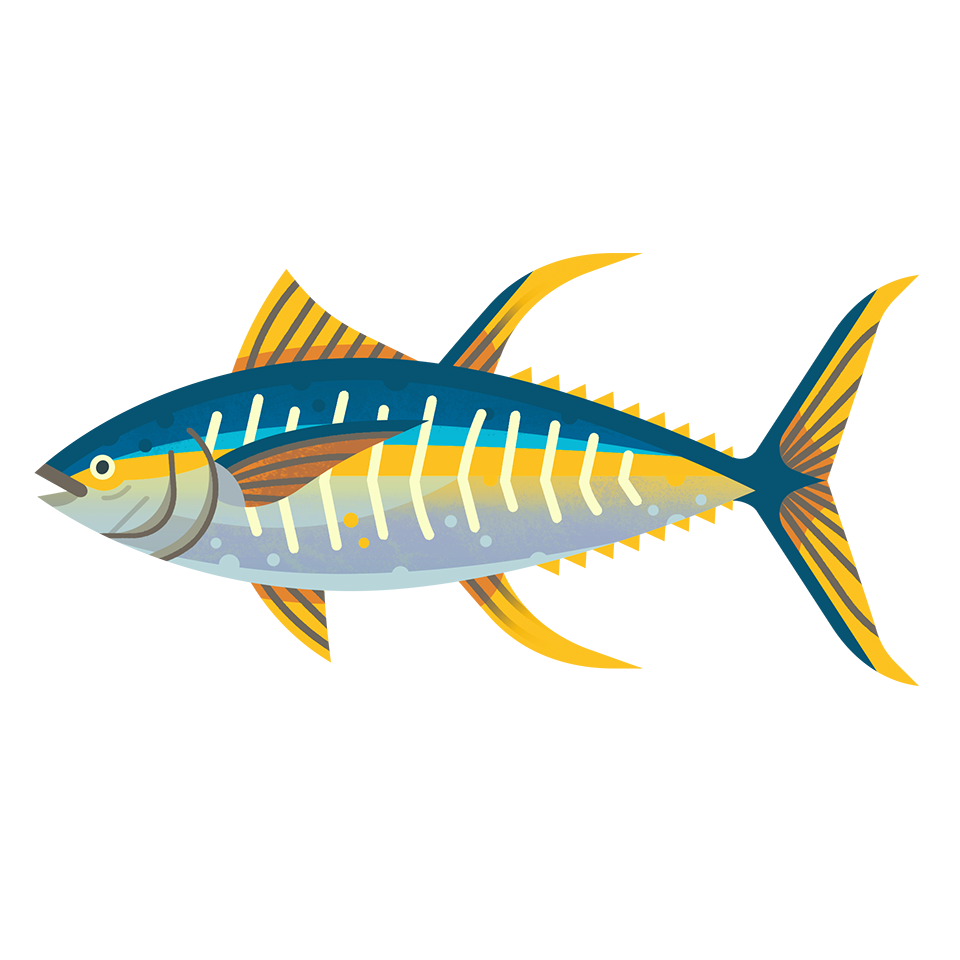
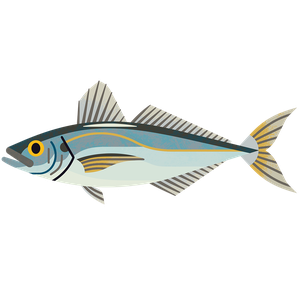
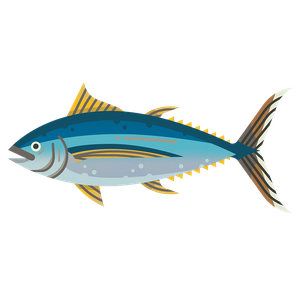
Yellowfin tuna
Thunnus albacares
Overview
Yellowfin tuna sustainability varies based on the location and fishing method. For the Best Choices, look for options from the Atlantic, Indian Ocean, or the Western Pacific, caught by pole & line, troll or handline. Marine Stewardship Council (MSC) certified options are also a Best Choice. Avoid all tuna caught by gillnet, which can bycatch dolphins, sharks and turtles. Yellowfin tuna is available in UK supermarkets as fresh or frozen steaks, and it may also be sold in various cuts by fishmongers. It is the most common tuna used in sushi in the UK and is widely served in seafood restaurants.
Ratings
Showing 21 results for Yellowfin tuna
Best Choice
Wild-caught
Location: Western and Central Pacific
Management area: Certified fleets only
Method: Hook & line (handline), Hook & line (pole & line)
Certification: Marine Stewardship Council (MSC)
More infoWild-caught
Location: Western and Central Pacific
Management area: All areas
Method: Hook & line (pole & line)
More infoWild-caught
Location: Atlantic
Management area: All areas
Method: Hook & line (handline), Hook & line (pole & line), Hook & line (troll)
More infoWild-caught
Location: Western and Central Pacific
Management area: Certified fleets only
Method: Hook & line (longline)
Certification: Marine Stewardship Council (MSC)
More infoWild-caught
Location: Western and Central Pacific
Management area: Certified fleets only
Method: Net (purse seine on aggregating devices or free-schooling fish)
Certification: Marine Stewardship Council (MSC)
More infoWild-caught
Location: Indian Ocean
Management area: All areas
Method: Hook & line (pole & line)
More infoWild-caught
Location: Indian Ocean
Management area: All areas
Method: Hook & line (handline)
More infoOK - Needs Improvement
Wild-caught
Location: Western and Central Pacific
Management area: All areas
Method: Net (purse seine on aggregating devices or free-schooling fish)
More infoWild-caught
Location: Western and Central Pacific
Management area: All areas
Method: Hook & line (longline)
More infoWild-caught
Location: Atlantic
Management area: All areas
Method: Net (purse seine on aggregating devices or free-schooling fish)
More infoWild-caught
Location: Indian Ocean
Management area: FIP participants only
Method: Net (purse seine on aggregating devices or free-schooling fish)
Certification: Fishery Improvement Project (FIP)
More infoWild-caught
Location: Indian Ocean
Management area: FIP participants only
Method: Hook & line (longline)
Certification: Fishery Improvement Project (FIP)
More infoWild-caught
Location: Eastern Pacific
Management area: All areas
Method: Net (purse seine on aggregating devices or free-schooling fish)
More infoWild-caught
Location: Eastern Pacific
Management area: All areas
Method: Net (purse seine using dolphins)
More infoWild-caught
Location: Indian Ocean
Management area: All areas
Method: Hook & line (longline)
More infoWild-caught
Location: Indian Ocean
Management area: All areas
Method: Net (purse seine on aggregating devices or free-schooling fish)
More infoWild-caught
Location: Eastern Pacific
Management area: All areas
Method: Hook & line (longline)
More infoAvoid
Under review
Sustainable swaps
Yellowfin tuna
Quickly check the sustainability of your fish or seafood with our step-by-step tool.
Find your fish or seafoodLearn more about how we calculate our sustainability ratings.
How our ratings work
Add impact to your inbox
Join the movement: get updates on the issues you care about.
We'll email you inspiring stories about the work we're doing to save and recover our oceans, and news about our urgent campaigns for positive change.