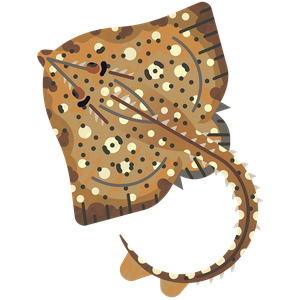
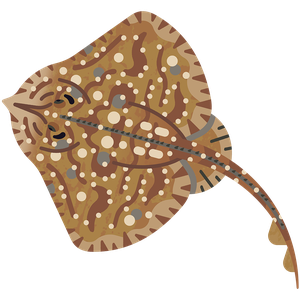
Cuckoo ray
Leucoraja naevus
What to check for
Location
West of Scotland, Southern Celtic Sea, Western English Channel and Bay of Biscay: Cornwall
Technical location
27 - Atlantic, Northeast, 8b: Bay of Biscay (Central), 8a: Bay of Biscay (North), 8d: Bay of Biscay (Offshore), 7: Irish Sea, Porcupine Bank, English Channel, Bristol Channel, Celtic Seas, West and Southwest of Ireland, 6: Rockall, West of Scotland
Caught by
Bottom trawl (beam)
Rating summary
For more information about this rating please visit: http://www.cornwallgoodseafoodguide.org.uk/fish-guide/cuckoo-ray.php
How we worked out this Rating
Stock status
The size and health of a fish population, or 'stock', that is being targeted by fishermen is a crucial indicator of whether a fishery is sustainable. If the stock is too small to withstand fishing, it is at risk of crashing. We look at how big the stock is, and how much pressure there is from fishing, to assess this. The target level that many fisheries aim for is 'Maximum Sustainable Yield' - the most fish that can be caught year after year whilst keeping the population at a healthy size.
Cuckoo ray in this area is not overfished and is not subject to overfishing.This stock was benchmarked in 2022. The number of surveys used for the biomass index increased from two to eight, thereby covering a much greater stock area. Relative biomass (B/BMSY) is now shown to be increasing and is considerably above MSY Btrigger.Cuckoo ray is a common offshore species of varying commercial value. As one of the smaller and less valuable species in the skate complex, it is not targeted. There can be high levels of discarding and discard survival is variable. The most recent stock assessment suggests that fishing pressure on the stock is below FMSY, and has been for the last decade.ICES advises that when the MSY approach is applied, landings in 2023 and 2024 should be no more than 7826 and 8064 tonnes respectively. This advice is substantially larger than the previous advice, and it is not known how this increase will impact discard rates for the species.

Management
Good management is vital to be sure that fishing doesn't cause fish populations to decline. We look at whether regulations follow the best available scientific advice, how well compliance is monitored and enforced, and whether this is effective in maintaining healthy fish stocks.
For more information about this rating please visit: http://www.cornwallgoodseafoodguide.org.uk/fish-guide/cuckoo-ray.php
Capture method
Environmental impacts of fishing vary hugely, depending on the method used and where it's happening. We look at whether the fishing gear being used could have an effect on seabed habitats, and if so, how severe might this be. We also review whether it catches any other species by accident (bycatch), and what effect this might have on those species - especially if they're Endangered, Threatened, or Protected.
For more information about this rating please visit: http://www.cornwallgoodseafoodguide.org.uk/fish-guide/cuckoo-ray.php
References
For more information about this rating please visit: http://www.cornwallgoodseafoodguide.org.uk/fish-guide/cuckoo-ray.php
Sustainable swaps
Learn more about how we calculate our sustainability ratings.
How our ratings work
Add impact to your inbox
Join the movement: get updates on the issues you care about.
We'll email you inspiring stories about the work we're doing to save and recover our oceans, and news about our urgent campaigns for positive change.