

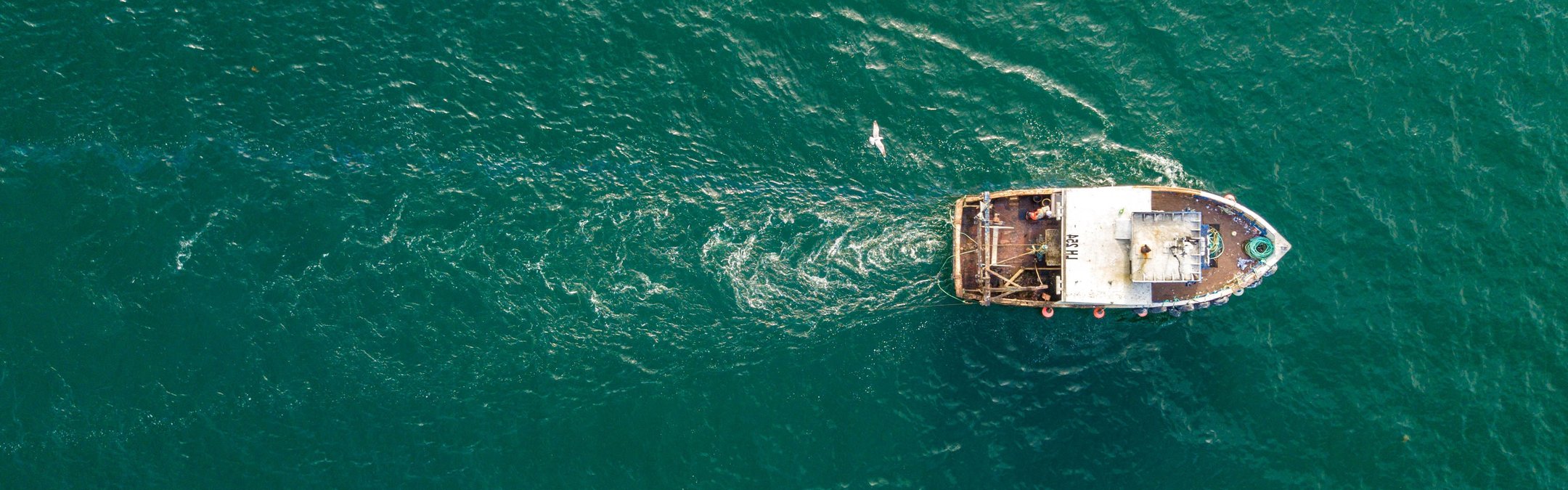
Electrifying the fleet report
Every sector has a role to play in transitioning to net-zero, including the UK’s fishing fleet. Our report - Electrifying the Fleet - presents new findings and a route forward to decarbonise the sector.
The report was developed in collaboration with WWF, RSPB, the NFFO, North Sea Wildlife Trusts and the University of Hull.
What role does the fishing sector play in achieving net zero?
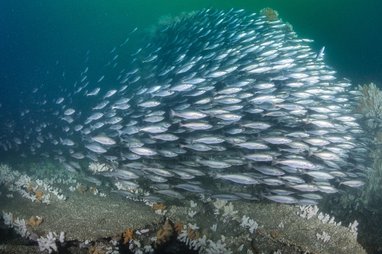
Image credit: Kirsty Andrews
What are the report findings?
- Technology to reduce harmful fuel use and cut emissions already exists today, and many fishers have shown interest in switching to a more sustainable hybrid system if it's affordable.
- The current licensing system encourages the use of fuel-inefficient, short, wide boats. If updated to focus less on length we could see significant energy and emissions reductions.
- To meet our climate commitments, improvements in battery technology, or alternative fuels using renewable energy, will be most likely to lead the way. Port infrastructure will need to be modernised to meet increased demand for power.
- There isn’t a one size fits all model and solutions will vary from one location to another.
You might also be interested in...
Fish farming
Aquaculture, or fish farming, is a general term for the farming of aquatic species, from fish and shellfish to seaweed.
Fishing and fisheries
A fishery is a clearly defined area where specific species of fish are caught using a particular method of fishing.
Fishing methods explained
There are many different ways to catch or farm fish and shellfish, and some have a much lower environmental impact than others. Here we explain the different fishing methods and how sustainability can be improved.

