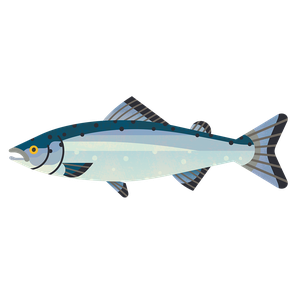
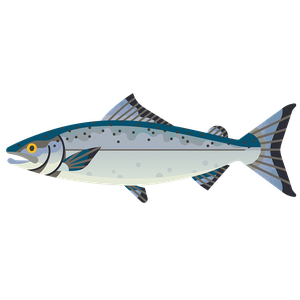
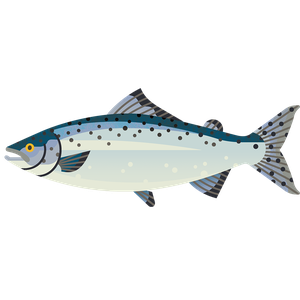
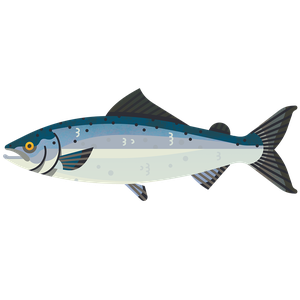
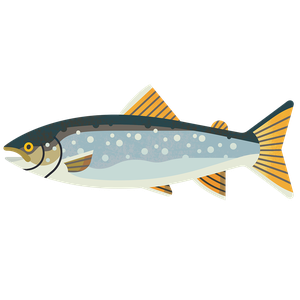
Rainbow trout
Oncorhynchus mykiss
What to check for
Location
All Areas, All areas, All areas
Production method
Open net pen, marine
Certification
GLOBALG.A.P.
Rating summary
GLOBALG.A.P. farmed rainbow trout is well managed and management is thought to be mostly effective. The standard mitigates many areas of environmental concern in open net pen aquaculture, including discharge of effluents, use of chemicals, disease and parasite interactions. However, escapes of farmed rainbow trout from marine net pens may still occur. The GLOBALG.A.P. standard has criteria in place for welfare and humane slaughter. However, lethal control of predators is permitted. The GLOBALG.A.P. feed standard has criteria in place for responsible sourcing for both marine and terrestrial ingredients, however, rainbow trout are net consumers of protein.This rating is based on full compliance with certification requirements. Commercial buyers should therefore ensure that full compliance has been achieved in order for this rating to be applicable.Rating last updated: November 2022
Technical consultation summary
GLOBALG.A.P. farmed rainbow trout is well managed and management is thought to be mostly effective. The standard mitigates many areas of environmental concern in open net pen aquaculture, including discharge of effluents, use of chemicals, disease and parasite interactions. However, escapes of farmed rainbow trout from marine net pens may still occur. The GLOBALG.A.P. standard has criteria in place for welfare and humane slaughter. However, lethal control of predators is permitted. The GLOBALG.A.P. feed standard has criteria in place for responsible sourcing for both marine and terrestrial ingredients, however, rainbow trout are net consumers of protein.
How we worked out this Rating
Feed
What feed is given to farmed fish, where it comes from and how much is used is one of the most important aspects of fish farming. In this section we look at how sustainable the feed is and how much fish is included in the diet.
Criteria on responsible feed are lacking in the GLOBALG.A.P. Aquaculture standard with currently no requirements for responsible ingredient sourcing, however the updated Feed Mill standard is expected to lead to improvements. Rainbow trout are net consumers of protein.Rainbow trout are fed on a commercial, pelleted feed that comprises fishmeal, fish oil and vegetable proteins and oils. The GLOBALG.A.P. aquaculture standard ensures that the protein and oil component of the feed used is known and traceable to species level.However, criteria for the fish oil and fish meal used are lacking with GLOBALG.A.P. certified farms only having to declare wild fish ingredients which originate from MarinTrust and MSC fisheries as a percentage. At present there are no requirements for fishmeal and fish oil to be responsibly sourced.Rainbow trout require more wild fish protein than they produce, making them a net consumer of protein. GLOBALG.A.P. does not restrict the amount of wild fish protein (fishmeal and fish oil) that can be used in rainbow trout feed.There is currently no requirement for soy products and palm oil to be sourced sustainably in the GLOBALG.A.P. standard. There is also no mention of the use of novel or alternative feed ingredients.
Fish health and welfare
Fish health and welfare is a concern for many consumers. High welfare standards are an indication of good farm management, we look to see if there are industry wide welfare standards in place, and if these include humane slaughter.
GLOBALG.A.P. has criteria in place to ensure animal welfare and humane slaughter. The GLOBALG.A.P. Aquaculture standard outlines practices that are in place to ensure animal welfare and humane slaughter. This includes a risk assessment for animal welfare. Humane slaughter practices are also in place.
Management
How aquaculture is regulated and how effective those regulations are is an important aspect of farmed fish production. We also look to see if aquaculture is included in broader environmental management plans. In this management section we also award scores for globally recognised certification standards, as certified seafood requires verification of environmental performance and traceability.
GLOBALG.A.P. farmed rainbow trout are well managed and management is thought to be mostly effective.The UK, Turkey, and Norway have committed to zonal based management of aquaculture. The GLOBALG.A.P. standard has criteria in place to cover the use of land water resources, discharge including effluents and their impacts, biosecurity and disease management. Certification criteria are also thought to be mostly effective in minimising environmental impacts.The GLOBALG.A.P. Aquaculture Standard incorporates aspects stipulated by the FAO Technical Guidelines on Aquaculture certification and the OIE Aquatic Animal Health Code. It is recognized both by the GFSI for food safety and GSSI at primary production level, covering key sustainability aspects for animal production for human consumption. The score for this section reflects GLOBALG.A.P. certified producers that are in full compliance with the standard.
References
Biomar. 2018. Sustainability Report. Available at https://www.biomar.com/globalassets/.global/pdf-files/biomar-group-sustainability-report-2018.pdf [Accessed on 12.02.2022].
European Commission. 2012. Guidance on Aquaculture and Natura 2000. Available at https://ec.europa.eu/fisheries/sites/fisheries/files/docs/body/guidance-aquaculture-natura2000.pdf [Accessed on 04.04.2022].
FAO. 2019. National Aquaculture Legislation Overview: United Kingdom. Available at http://www.fao.org/fishery/legalframework/nalo_uk/en [Accessed on 04.04.2022]
FAO. Oncorhynchus mykiss (Walbaum 1792). Available at https://www.fao.org/fishery/en/culturedspecies/oncorhynchus_mykiss/en [Accessed on 28.03.2022].
GLOBALG.A.P. 2022. Integrated Farm Assurance Smart/GFS. Version 6.0 June 2022. Available at https://www.globalgap.org/.content/.galleries/documents/220607_IFA_Smart_GFS_PCs_AQ_interim_final_amended_v6_0_Jun22_en.pdf [Accessed on 25.10.2022].
GLOBALG.A.P. 2016. Compound Feed Manufacturing. Version 2 August 2016. Available at https://www.globalgap.org/.content/.galleries/documents/160805_gg_cfm_cpcc_v2.2_Aug16_en.pdf [Accessed on 20.02.2023].
Naylor, R. L., Hardy, R. W., Buschmann, A. H., Bush, S. R., Cao, L., Klinger, D. H., Little, D. C., Jubchenco, J., Shumway, S. E and Troell, M. 2021. A 20-year retrospective review of global aquaculture. Nature. 591 (551-563). Available at https://www.nature.com/articles/s41586-021-03308-6#Tab1 [Accessed on 04.04.2022].
O’Donohoe, P. Kane, F.McDermott, T. Jackson,D. 2016. Sea reared rainbow trout, Oncorhynchus mykiss need fewer sea lice treatments that Atlantic salmon, Salmo salar. Bulletin European Association of Fish Pathology 36(5).201
Quality Trout UK. Combined Farm & Hatchery Certification Standards. Issue 5.9 (9th November 2021). Available at http://qualitytrout.co.uk/wp-content/uploads/2021/12/Quality-Trout-UK-Standard-Issue-5.9-9-11-2021-for-release.pdf [Accessed on 4.04.2022].
Quality Trout UK. The Code of Good Practice for Scottish Finfish Aquaculture. Available at http://qualitytrout.co.uk/code-of-good-practice/ [Accessed on 28.03.2022].
Seafish. Rainbow Trout. Available at https://www.seafish.org/responsible-sourcing/aquaculture-farming-seafood/species-farmed-in-aquaculture/aquaculture-profiles/rainbow-trout/sources-quantities-and-cultivation-methods/ [Accessed on 28.03.2022].
Sustainable swaps
Learn more about how we calculate our sustainability ratings.
How our ratings work
Add impact to your inbox
Join the movement: get updates on the issues you care about.
We'll email you inspiring stories about the work we're doing to save and recover our oceans, and news about our urgent campaigns for positive change.