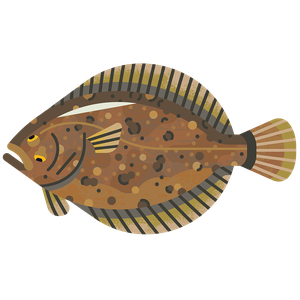
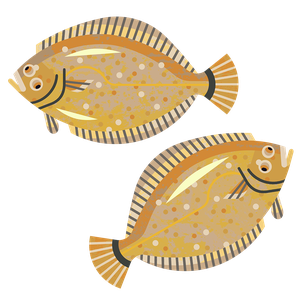
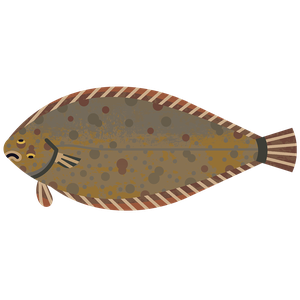
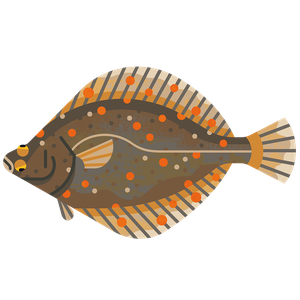
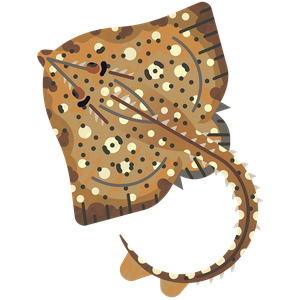
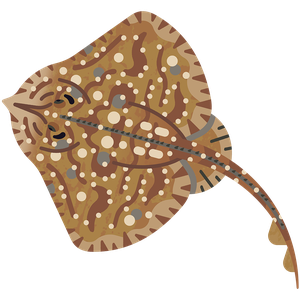
Turbot
Psetta maxima
What to check for
Location
All Areas
Production method
Tanks, flow through
Certification
GLOBALG.A.P.
Rating summary
The GLOBALG.A.P. certification addresses a number of issues of environmental concern, the auditing of which requires farm inspections and standard criteria enforcement. GLOBALG.A.P. certified turbot feed is traceable and incorporates responsibly sourced fishmeal, soy, and palm oil. However, little is known about the composition of turbot feed and turbot is thought to have a large dependency on fish oil and fishmeal in it's diet, making it a net consumer of protein. Turbot farmed in flow-through systems in Spain have few environmental issues associated with their production. Chemicals and discharges are managed by the GLOBALG.A.P. standard and pathogens and parasites are not thought to be a regional level risk in flow-through systems. Hatchery-produced juveniles are used and escapes are unlikely. Lethal control of predators is permitted. GLOBALG.A.P. has criteria in place to ensure animal welfare and humane slaughter. For turbot production in Spain certified to the GLOBALG.A.P. standard, all regulations are in place and thought to be fully effective.This rating is based on full compliance with certification requirements. Commercial buyers should therefore ensure that full compliance has been achieved in order for this rating to be applicable.Rating last updated April 2024.
Technical consultation summary
Although turbot has a large dependency on wild fish in its diet, the GLOBALG.A.P. feed standard requires the majority of feed ingredients to be responsibly sourced. The GLOBALG.A.P. certification addresses a number of issues of environmental concern in turbot farming, the auditing of which requires farm inspections and standard criteria enforcement. Turbot farming in flow-through tanks is thought to be a small industry. GLOBALG.A.P. has criteria in place to ensure there is adequate animal welfare and humane slaughter in place. Spain has spatial planning in place.
How we worked out this Rating
Feed
What feed is given to farmed fish, where it comes from and how much is used is one of the most important aspects of fish farming. In this section we look at how sustainable the feed is and how much fish is included in the diet.
The GLOBALG.A.P. feed standard requires the majority of feed ingredients to be responsibly sourced. However, Atlantic halibut has a large dependency on wild fish in its diet.All farmed turbot rely on formulated feeds and the use of commercial aquafeed is the norm in Spain.The GLOBALG.A.P. standard requires ingredients used in feeds to be traceable. For marine ingredients, a minimum of 60% should come from responsibly managed fisheries. This may be verified by GSSI or MarinTrust. This will be raised to 75% by January 2025.There are also requirements in place for vegetable ingredients. There is a 75% requirement for soy to come from FEFAC sources, which are traceable to countries that are deforestation free.Turbot has a high dependency on fishmeal and fish oil in it's diet and is a net consumer of protein.Under the GLOBALG.A.P. certification, compound feed manufacturers are encouraged to proactively assess the possible use of novel feed ingredients.
Environment
The environmental impacts of aquaculture depend on what fish is farmed, how and where. It could be habitat damage, chemical use, pollution, freshwater use or parasites. In this section we look at the environmental impacts of greatest concern for that species and production method. Some species, such as shellfish, have very little impact, whilst others may give us cause for concern.
Turbot farmed in flow-through systems in Spain have few environmental issues associated with their production.Turbot production is relatively small-scale and farmed in flow-through tanks. These tanks use seawater pumped ashore which is then pumped through the tank system. The system uses seawater so freshwater depletion is not thought to be an issue. In addition, habitat alteration is thought to be small scale in this type of production.Juveniles used are hatchery based.Chemicals are used in farmed turbot production, but their usage is limited by GLOBALG.A.P. standard criteria. There is a veterinary health plan in place which monitors the chemical impacts on the surrounding environment and has specific criteria on when antibiotics can be used. Discharge of effluent is easier to control in flow-through systems than open-net pens and clean up technologies are available. The GLOBALG.A.P. standard has criteria in place to control discharges and disposal of waste.Flow through systems can allow disease outbreak to occur and parasites may be present in turbot. However, with the filters used, the risk of both is thought to be low and there is not thought to be a regional level risk and no reported impact on wild populations.Escapes in this type of production are unlikely and the GLOBALG.A.P. standard criteria require maintenance records, records of actions taken to correct equipment and farms are required to have an effective documented procedure for preventing escapes.Lethal control of predators is permitted.
Fish health and welfare
Fish health and welfare is a concern for many consumers. High welfare standards are an indication of good farm management, we look to see if there are industry wide welfare standards in place, and if these include humane slaughter.
GLOBALG.A.P. has criteria in place to ensure animal welfare and humane slaughter.The GLOBALG.A.P. Aquaculture standard outlines practices that ensure animal welfare and humane slaughter are in place. This includes a risk assessment for animal welfare.
Management
How aquaculture is regulated and how effective those regulations are is an important aspect of farmed fish production. We also look to see if aquaculture is included in broader environmental management plans. In this management section we also award scores for globally recognised certification standards, as certified seafood requires verification of environmental performance and traceability.
For turbot production in Spain certified to the GLOBALG.A.P. standard, all regulations are in place and thought to be fully effective.This assessment covers all turbot certified to the GLOBALG.A.P. standard, produced in Spain. Spain has a comprehensive range of regulations in place for the aquaculture industry, including a National Plan programme that includes aquaculture.The GLOBALG.A.P. standard has criteria in place that cover Environmental Impact Assessment (EIA), identification and protection of valuable habitats and species, use of land and water resources, use of chemicals including licensing, discharges including effluents and their impacts, biosecurity and disease management, and species introduction. These criteria are thought to be fully effective is minimizing negative environmental impacts.The GLOBALG.A.P. Aquaculture Standard incorporates aspects stipulated by the FAO Technical Guidelines on Aquaculture certification and the OIE Aquatic Animal Health Code. It is recognized both by the GFSI for food safety and GSSI at primary production level, covering key sustainability aspects for animal production for human consumption.
References
FAO. Fisheries and Aquaculture. Scophthalmus maximus (Linnaeus 1758). Available at https://www.fao.org/fishery/en/culturedspecies/psetta_maxima [Accessed on 09.04.2024].
Fernández-González, R., Pérez-Pérez, M.I. and Garza-Gil, M.D. 2021. Main issues and key factors for development of turbot aquaculture in Spanish regions: A social-ecological perspective. Aquaculture (544). Available at https://doi.org/10.1016/j.aquaculture.2021.737140. [Accessed on 09.04.2024].
GLOBALG.A.P. 2021. Integrated Farm Assurance. Version 5.4-1-GFS. All Farm Base - Aquaculture Module. Available at https://documents.globalgap.org/documents/220125_GG_IFA_CPCC_AQ_V5_4-1-GFS_en.pdf [Accessed on 09.04.2024].
GLOBALG.A.P. 2022. Integrated Farm Assurance Smart/GFS. Version 6.0 June 2022. Available at https://www.globalgap.org/.content/.galleries/documents/220607_IFA_Smart_GFS_PCs_AQ_interim_final_amended_v6_0_Jun22_en.pdf [Accessed on 09.04.2024].
GLOBALG.A.P. 2023. Compound Feed Manufacturing. Version 3.1 September 2024. Available at https://documents.globalgap.org/documents/240924_GG_CFM_CPCCs_v3_1_Sep23_en.pdf [Accessed on 09.04.2024].
Seafish. Turbot. Available at https://www.seafish.org/responsible-sourcing/aquaculture-farming-seafood/species-farmed-in-aquaculture/aquaculture-profiles/turbot/escapes-and-introductions/ [Accessed on 09.04.2024].
Sustainable swaps
Learn more about how we calculate our sustainability ratings.
How our ratings work
Add impact to your inbox
Join the movement: get updates on the issues you care about.
We'll email you inspiring stories about the work we're doing to save and recover our oceans, and news about our urgent campaigns for positive change.