Grey gurnard
What to check for
North Sea, Eastern English Channel and Skagerrak and Kattegat: All areas
Bottom trawl (otter)
Rating summary
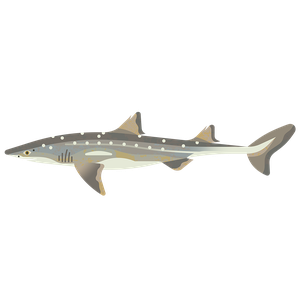
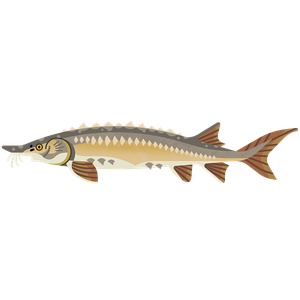
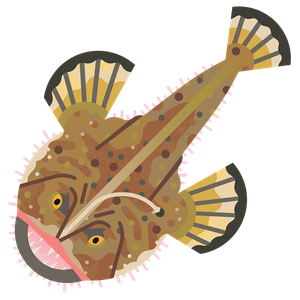
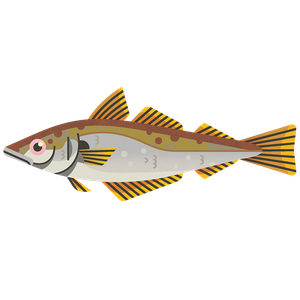
This stock is data limited and there are no reference points to indicate whether biomass is at a sustainable level. There is concern for the biomass due to a decline in the biomass index and no concern for fishing pressure. Gurnards are a non-quota species and are often discarded due to low market demand. There is no management plan in place for grey gurnard and management requires considerable improvement, and a better understanding of the stock. Otter trawlers are likely to cause some damage to the seabed. Bycatch in otter trawling is moderate and may include some vulnerable species.
Rating last updated July 2022.
How we worked out this Rating
References
Eigaard, O. R. et al., 2016. Estimating seabed pressure from demersal trawls, seines, and dredges based on gear design and dimensions. ICES J Mar Sci;73(suppl_1):i2, s.l.: s.n.
Froese R. and Pauly D. (Editors), 2022. Eutrigla gurnardus. Grey gurnard. Available at https://www.fishbase.de/Summary/SpeciesSummary.php?ID=68&AT=grey+gurnard [Accessed on 01.07.2022].
Hiddink, J. et al., 2017. Global analysis of depletion and recovery of seabed biota after bottom trawling disturbance. Proc Natl Acad Sci. 114(31):8301–6.
ICES. 2022. Grey gurnard (Eutrigla gurnardus) in Subarea 4 and divisions 7.d and 3.a (North Sea, eastern English Channel, Skagerrak and Kattegat). In Report of the ICES Advisory Committee, 2022. ICES Advice 2022, gug.27.3a47d. Available at https://doi.org/10.17895/ices.advice.19447934 [Accessed on 01.07.2022].
Kennelly, S. J. & Broadhurst, M. K., 2021. A review of bycatch reduction in demersal fish trawls. Rev Fish Biol Fisheries 31, 289–318.
Kynoch, R., Fryer, R. & Neat, F., 2015. A simple technical measure to reduce bycatch and discard of skates and sharks in mixed-species bottom-trawl fisheries. ICES J Mar Sci,72(6):1861.
McCarthy, I. D., Cant, J. and Marriott, A. L.2018. Population biology of grey gurnard (Eutrigla gurnardus (L.); Triglidae) in the coastal waters of Northwest Wales. Journal of Applied Ichthyology. 34(4). pp.896-905
Pinnegar, J. 2017. Fisheries and aquaculture climate science: Potential impacts, adaptation and mitigation - overview of current scientific knowledge and cutting-edge developments. Presented to the Seafish Common Language Group, June 2017, London, UK. Available at: https://www.seafish.org/media/1698860/clg_june2017_fish_aquaclimatescience_cefas2.pdf [Accessed on 30.06.2022].
Silva, F., Ellis, J. & Catchpole, T., 2012. Species composition of skates (Rajidae) in commercial fisheries around the British Isles and their discarding patterns. J Fish Biol., 80:1678–1703.
van Denderen, P. et al., 2015. Similar effects of bottom trawling and natural disturbance on composition and function of benthic communities across habitats. Mar Ecol Prog Ser. 2015;541:31–43.