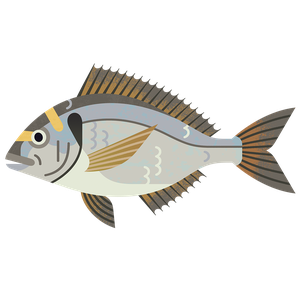
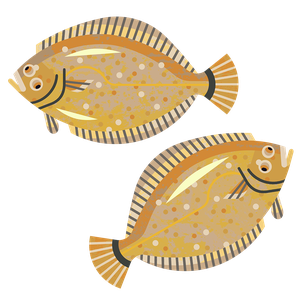
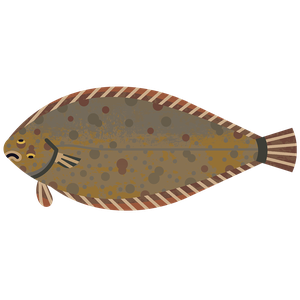
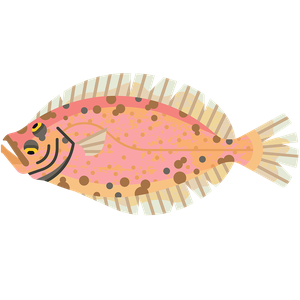
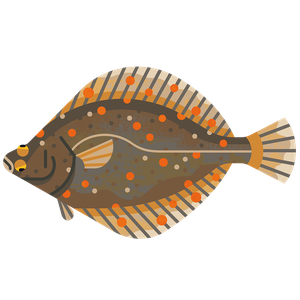
John Dory
Zeus faber
What to check for
Location
North East Atlantic: Cornwall IFCA District (0-6nm)
Technical location
27 - Atlantic, Northeast, 1: Barents Sea, 8: Bay of Biscay, 5: Iceland and Faeroes Grounds, 7: Irish Sea, Porcupine Bank, English Channel, Bristol Channel, Celtic Seas, West and Southwest of Ireland, 4: North Sea, 2: Norwegian Sea, Spitzbergen, and Bear Island, 9: Portuguese Waters, 6: Rockall, West of Scotland, 3: Skagerrak, Kattegat, Transition Area, Baltic Sea
Caught by
Net (gill or fixed)
Rating summary
For more information about this rating please visit: http://www.cornwallgoodseafoodguide.org.uk/fish-guide/john-dory.php
How we worked out this Rating
Stock status
The size and health of a fish population, or 'stock', that is being targeted by fishermen is a crucial indicator of whether a fishery is sustainable. If the stock is too small to withstand fishing, it is at risk of crashing. We look at how big the stock is, and how much pressure there is from fishing, to assess this. The target level that many fisheries aim for is 'Maximum Sustainable Yield' - the most fish that can be caught year after year whilst keeping the population at a healthy size.
This stock is severely data-limited, with no formal stock assessment for over 10 years. There is concern for the biomass but no concern for fishing pressure.Little is known about John dory. It is a widely distributed species throughout the world, but there are no formal stock assessments or management measures in place. In at least one part of its range, off Mauritania, the species experienced a rate of decrease in biomass of 7% annually over a period of 24 years. It continues to be heavily exploited off Mauritania. In the UK, however, a 2011 report assessed it as an 'underutilised' species.While there is no information about the status of the stock, in the UK there is no targeted fishery for this species, and it is only caught as unavoidable bycatch. As long as this remains the case, MCS considers that fishing pressure is not of concern. This species has medium resilience to fishing pressure.John Dory is generally found shallower than 200m, and shows preference for warmer temperatures. Consequently, it is considered a climate change 'winner', with increasing sea temperatures resulting in more suitable habitat being available. Their distributions are shifting northwards and fishers have recently seen more of more of them in the North Sea.This is not a targeted species, occurring instead as bycatch in demersal fisheries. FAO data indicates that catches of this species in the North East Atlantic (NEA) peaked in 2010 at 5,100 tonnes and then declined to 3,131t in 2016 - the lowest catch since 2002. According to the Marine Management Organisation (MMO), 229 tonnes of John Dory were landed by UK vessels in 2020, about half of which was caught in the western English Channel. Most of the rest was caught to the west of that, in the Bristol Channel, Celtic Sea and south and west of Ireland. It is possible that the fish in these areas constitute one stock, with another off the Iberian coast, but stock structure is unknown. Over 75% of the catch in 2020 was by otter trawl, and most of the rest (around 12%) by beam trawl. As with the wider North East Atlantic fishery, recent UK catches have declined (from 308 tonnes in 2014). This could be caused by a number of factors.

Management
Good management is vital to be sure that fishing doesn't cause fish populations to decline. We look at whether regulations follow the best available scientific advice, how well compliance is monitored and enforced, and whether this is effective in maintaining healthy fish stocks.
For more information about this rating please visit: http://www.cornwallgoodseafoodguide.org.uk/fish-guide/john-dory.php
Capture method
Environmental impacts of fishing vary hugely, depending on the method used and where it's happening. We look at whether the fishing gear being used could have an effect on seabed habitats, and if so, how severe might this be. We also review whether it catches any other species by accident (bycatch), and what effect this might have on those species - especially if they're Endangered, Threatened, or Protected.
No justification available.
References
For more information about this rating please visit: http://www.cornwallgoodseafoodguide.org.uk/fish-guide/john-dory.php
Sustainable swaps
Learn more about how we calculate our sustainability ratings.
How our ratings work
Add impact to your inbox
Join the movement: get updates on the issues you care about.
We'll email you inspiring stories about the work we're doing to save and recover our oceans, and news about our urgent campaigns for positive change.