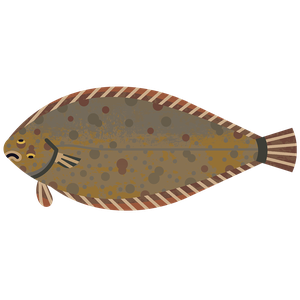
Meagre
What to check for
Global: European Union and Turkey, All areas
Open net pen, marine
Rating summary
Meagre feed is traceable and requirements are in place for responsible ingredient sourcing, however, it is a net consumer of protein. Farming in marine net pens can have a negative environmental impact such as the use of chemicals, and there is a lack of data available of escapes. However, there is no use of freshwater supplies and habitat alteration is small scale. There also not thought to be a widespread issue of parasites or pathogens. There are practices in place for animal welfare and there is adequate management and regulations in place.
Rating last updated April 2023.
How we worked out this Rating
References
Arechavala-Lopa, P. Toldeo-Guedes, K. et al. 2018. Implications of Sea Bream and Sea Bass Escapes for Sustainable Aquaculture Management: A Review of Interactions, Risks and Consequences. Reviews in Fisheries Science and Aquaculture. 28(214-234).
BioMar. 2021. Global Sustainability Report. Available at https://www.biomar.com/globalassets/.global/sustainability-report/en_biomar-global-sustainability-report-2021.pdf [Accessed on 25.10.2022].
Cardia, F. and Lovatelli, A. 2017. Aquaculture operations in floating HDPE cages. A field handbook. FAO Fisheries and Aquaculture Technical Paper 593.
Compassion in World Farming (CWF). 2018. Humane Slaughter: Gilthead sea bream and European sea bass. Available at https://www.compassioninfoodbusiness.com/media/7434843/humane-slaughter-european-sea-bass-and-gilthead-sea-bream.pdf [Accessed on 25.10.2022].
European Commission. 2021. Strategic guidelines for a more sustainable and competitive EU aquaculture for the period 2021 to 2030. Available at https://ec.europa.eu/info/law/better-regulation/have-your-say/initiatives/12261-EU-fish-farms-aquaculture-updated-guidelines_en [Accessed on 25.10.2022].
FAO. 2020. Fishery and Aquaculture Statistics. Global production by production source 1950-2018 (FishstatJ). In: FAO Fisheries and Aquaculture Department [online]. Rome. Updated 2020. Available at www.fao.org/fishery/statistics/software/fishstatj/en [Accessed on 25.10.2022].
FEFAC SOY SOURCING GUIDELINES 2021. Available at https://fefac.eu/wp-content/uploads/2021/02/FEFAC-Soy-Sourcing-Guidelines-2021-1.pdf [Accessed on 15.10.2022].
Fishsource. 2021. Aquaculture Profiles. Seabass/seabream. Turkey. Available at https://www.fishsource.org/ama_page?id=91 [Accessed on 25.10.2022].
Mladineo I, Šegvić-Bubić T, Stanić R, Desdevises Y. 2013. Morphological Plasticity and Phylogeny in a Monogenean Parasite Transferring between Wild and Reared Fish Populations. PLOS ONE 8(4): e62011.
Prevent Escape. 2013. Prevent Escape Project Compendium. Available at https://issuu.com/oceanografica/docs/prevent_escape [Accessed on 25.10.2022].
Rodrigo Orrego. 2018. Fish Farming Expert: Fish Farming School. Available at https://www.fishfarmingexpert.com/fishfarming-school/1265835 [Accessed on 25.10.2022].
Roundtable on Responsible Soy. Version 4.0 2021. Available at https://responsiblesoy.org/documentos/rtrs-standard-for-responsible-soy-production-v4-0?lang=en#:~:text=0,-Last%20approved%20Version&text=Generic%20standard%20setting%20out%20Requirements,conformity%20in%20certified%20production%20sites [Accessed on 15.10.2022].
RSPO Principles and Criteria for the Production of Sustainable Palm Oil. 2018. Available at https://rspo.org/standards [Accessed on 25.10.2022].
Seafish. Aquaculture Profiles. European Sea Bass. Feed. Available at https://www.seafish.org/responsible-sourcing/aquaculture-farming-seafood/species-farmed-in-aquaculture/aquaculture-profiles/european-sea-bass/feed/ [Accessed on 07.12.2022].
Skretting. 2021 Sustainability report. Available at https://www.skretting.com/siteassets/global/sustainability/pdfs/pdf-interactive-skretting-sustainability-report-2021.pdf?v=4a2cef [Accessed on 25.10.2022].
Skretting. Soy and oil palm ingredients sourcing policy – roadmap 2025. Available at https://www.skretting.com/globalassets/shared-documents/sustainability/201203-nutreco-soy-and-oil-palm-ingredients-sourcing-policy.pdf?v=4af3f1 [Accessed on 25.10.2022].
Tornero, V. and Hanke, G. 2016. Chemical contaminants entering the marine environment from sea-based sources: A review with a focus on European seas. Marine Pollution Bulletin. 112(1-2).
WWF. 2021. Sea bass and sea bream supply chain study: from Turkey to Europe. Fish Forward Project: Responsible seafood consumption for the benefit of people, oceans and climate. Published by WWF-UK. Available at https://www.fishforward.eu/wp-content/uploads/2021/07/WWF_supply_chain_study_2021_seabass_seabream.pdf [Accessed on 25.10.2022].