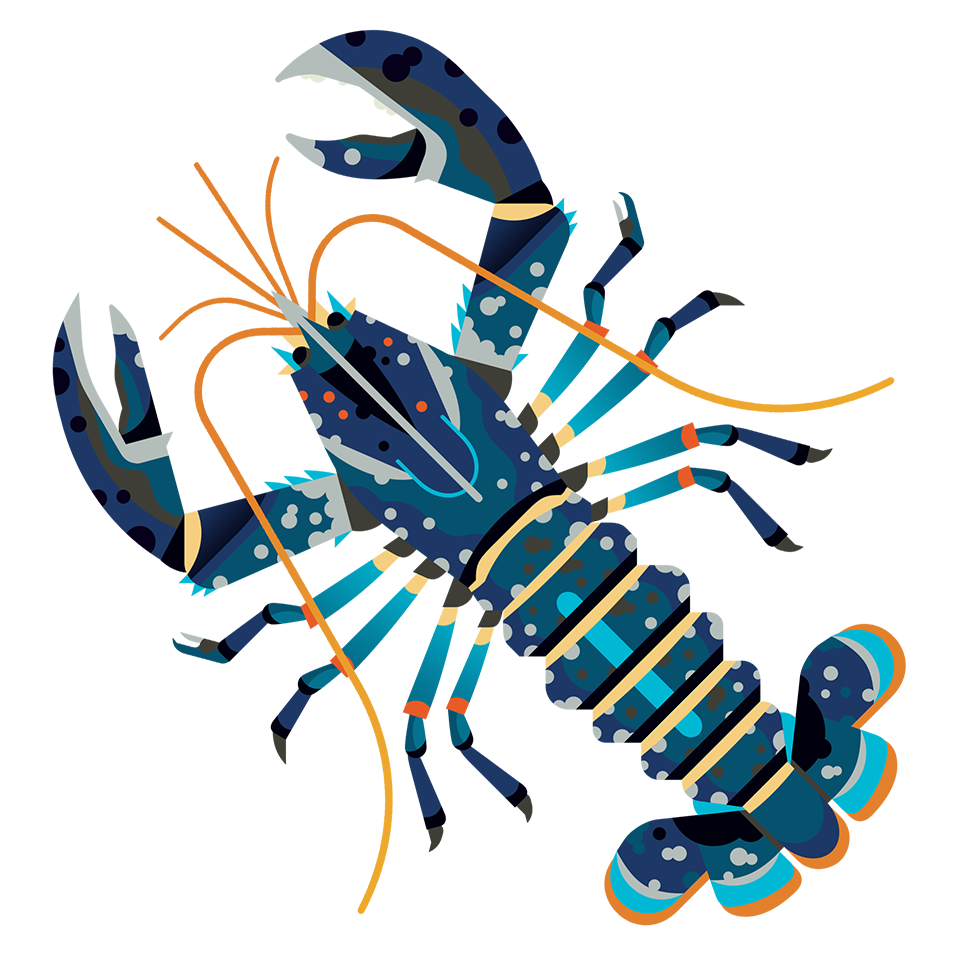
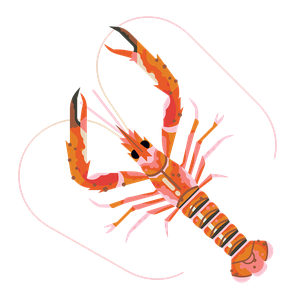
European lobster
Homarus gammarus
Overview
European lobster sustainability varies. The Best Choice is Marine Stewardship Council (MSC) certified from Jersey. Avoid lobsters caught on the West and East coast of Scotland. All other European lobsters are OK, but improvements are needed. Lobster may be sold whole by fishmongers or used in prepared products and is sometimes found in supermarkets and restaurants.
Ratings
Showing 28 results for European lobster
Best Choice
Wild-caught
Location: Jersey
Management area: Granville Bay Treaty Area
Method: Pot, trap or creel
Certification: Marine Stewardship Council (MSC)
More infoOK - Needs Improvement
Wild-caught
Location: England (Northwest)
Management area: Offshore (beyond 6nm)
Method: Pot, trap or creel
More infoWild-caught
Location: England (Southwest)
Management area: Devon and Severn IFCA District (0-6nm)
Method: Pot, trap or creel
More infoWild-caught
Location: England (Southwest)
Management area: Isles of Scilly IFCA District (0-6nm)
Method: Pot, trap or creel
More infoWild-caught
Location: England (Northwest)
Management area: North Western IFCA District (0-6nm)
Method: Pot, trap or creel
More infoWild-caught
Location: Wales (Irish Sea)
Management area: Welsh waters
Method: Pot, trap or creel
More infoWild-caught
Location: England (Southwest)
Management area: Cornwall IFCA District (0-6nm)
Method: Pot, trap or creel
More infoWild-caught
Location: Wales (Celtic Sea)
Management area: Welsh waters
Method: Pot, trap or creel
More infoWild-caught
Location: England (Southwest)
Management area: Offshore (beyond 6nm)
Method: Pot, trap or creel
More infoWild-caught
Location: Isle of Man
Management area: Isle of Man (0-12nm)
Method: Pot, trap or creel
More infoWild-caught
Location: England (Southeast South Coast)
Management area: Offshore (beyond 6nm)
Method: Pot, trap or creel
More infoWild-caught
Location: England (Southeast South Coast)
Management area: Kent and Essex IFCA District (0-6nm)
Method: Pot, trap or creel
More infoWild-caught
Location: England (Yorkshire Humber)
Management area: North Eastern IFCA District (0-6nm)
Method: Pot, trap or creel
More infoWild-caught
Location: England (East Anglia)
Management area: Kent and Essex IFCA District (0-6nm)
Method: Pot, trap or creel
More infoWild-caught
Location: England (Southeast South Coast)
Management area: Southern IFCA District (0-6nm)
Method: Pot, trap or creel
More infoWild-caught
Location: England (Southeast South Coast)
Management area: Sussex IFCA District (0-6nm)
Method: Pot, trap or creel
More infoWild-caught
Location: England (Northumberland and Durham)
Management area: North Eastern IFCA District (0-6nm)
Method: Pot, trap or creel
More infoWild-caught
Location: England (Northumberland and Durham)
Management area: Northumberland IFCA District (0-6nm)
Method: Pot, trap or creel
More infoWild-caught
Location: Scotland (Shetland)
Management area: All areas
Method: Pot, trap or creel
More infoWild-caught
Location: England (Southwest)
Management area: Cornwall IFCA District (0-6nm)
Method: Net (gill or fixed)
More infoWild-caught
Location: Northern Ireland
Management area: All areas
Method: Pot, trap or creel
More infoWild-caught
Location: England (East Anglia)
Management area: Offshore (beyond 6nm)
Method: Pot, trap or creel
More infoWild-caught
Location: England (Northumberland and Durham)
Management area: Offshore (beyond 6nm)
Method: Pot, trap or creel
More infoWild-caught
Location: England (Yorkshire Humber)
Management area: Offshore (beyond 6nm)
Method: Pot, trap or creel
More infoWild-caught
Location: Scotland (Orkney)
Management area: All areas
Method: Pot, trap or creel
More infoAvoid
Under review
Wild-caught
Location: England (East Anglia)
Management area: Eastern IFCA District (0-6nm)
Method: Pot, trap or creel
More infoSustainable swaps
European lobster
Quickly check the sustainability of your fish or seafood with our step-by-step tool.
Find your fish or seafoodLearn more about how we calculate our sustainability ratings.
How our ratings work
Add impact to your inbox
Join the movement: get updates on the issues you care about.
We'll email you inspiring stories about the work we're doing to save and recover our oceans, and news about our urgent campaigns for positive change.